

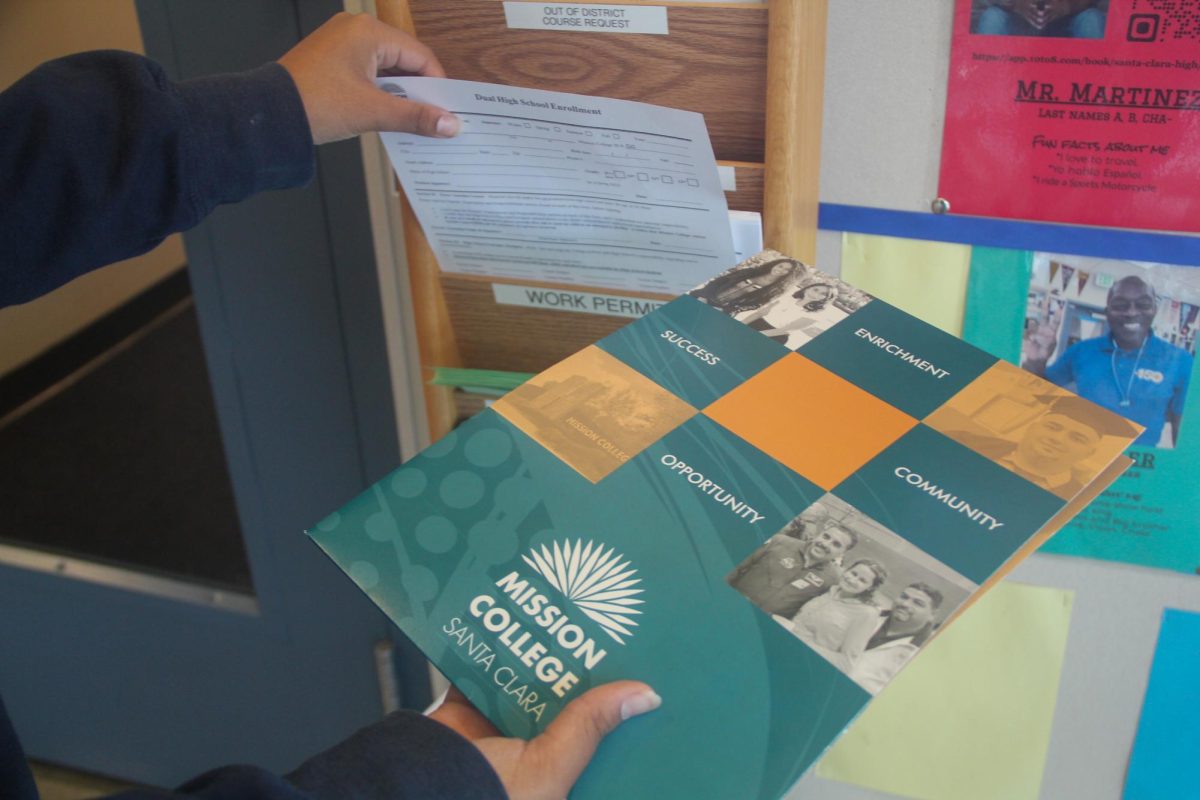
Dual enrollment, a program where students take courses at different institutions alongside classes at school, is often used to complete A-G credit requirements for graduation. At the start of the 2025-26 school year, SCUSD updated their policy, digitalizing the process and including clearer restrictions on which classes can be transferred to high school transcripts.
Now, students are unable to use out of district courses for high school credit if they are already offered at SCHS, unless it is full or conflicts with another class. Many, like sophomore Saharsh Navudu, expressed confusion on why the change was necessary.
“I don’t understand why they did it. I don’t think they’ve ever had a problem with kids taking stuff outside of school,” Navudu said. “I just don’t see the need for it.”
Vice principal of counseling, curriculum and instruction Tony Lam explained that the district noticed a decline in on-campus enrollment for core classes such as history due to many completing the requirement outside in preference of different classes at school.
“We used to have three periods of AP U.S. history. The last several years, we’ve only had one,” Lam said.
Lam said the new policy’s intent was to balance dual enrollment with keeping students connected to campus learning.
“We want to exhaust every opportunity for the students to take the class here,” Lam said. “Taking college classes shouldn’t be to circumvent the classes that you have to take within school.”
Before the policy update, sophomore Mahati Srinivasan planned on completing history with dual enrollment to take more classes that reflect personal interests on campus and believes students should have an option to still do this.
“I’m not a history person and I didn’t want to take it next year. I wanted to double up on something I enjoy more, like math,” Srinivasan said. “You should be able to take classes you’re not interested in as a side and be able to focus on what you’re more interested in in school.”
Lam, however, stressed that dual enrollment is not being eliminated. It still provides a way to take the specialized and more challenging classes students desire for enrichment purposes.
“Take classes that are of interest to you. Test the waters out,” Lam said. “We’re not trying to put the kibosh on taking classes outside, just keeping the core classes at the high school level… because that’s what we specialize in.”
SCHS counselor Oscar Martinez explained how taking dual-enrollment classes now can be helpful later.
“The universities will still count them,” Martinez said. “Students can get double credit at their institution, especially if it’s a community college and/or a public university.”
Despite the benefits, freshman Dyuti Batchu believes students will be less interested in dual enrollment in general with the new changes.
“I do think this policy will discourage students who are already busy,” Batchu said. “They will see it as a waste of time to do everything necessary to get approved and then not have it show up on their transcript.”
Junior Vikram Atmuri agreed, explaining that students would not try dual enrollment due to its primary appeal being removed.
“Many students indulge in it in the first place because they do not want to take a class or want to take it at the same time as another,” Atmuri said. “Restricting this usage makes them less keen on dual enrollment because if they can’t transfer it into their high school credits, they don’t see any benefits.”
Beyond his concerns about the new policy slowing student motivation, Atmuri also claimed that it undermines the idea that education should be about learning rather than simply checking off a list of credits.
“I think the whole point of taking a class is to gain the knowledge that you need, and dual enrollment does offer that,” Atmuri said. “I don’t feel like the amount of classes that are available at school should be a roadblock for that.”
Lam believes that the quality of high school education is more suited for their students than college level courses.
“High school teachers understand the learning needs of teenagers,” Lam said. “(In) college, you’re just a number. You don’t know anybody. You don’t interact with the instructor. You just do your work. The learning is very sterile.”
Students like senior Ina Forzetting, however, found that taking a college class actually provided her with valuable experiences.
“It was interesting to see the different point of views from college kids while being in high school,” Forzetting said. “I wouldn’t have ever had these thoughts otherwise.”
While opinions differ, Martinez hopes students see the broader purpose behind the district’s decision and encourages them to speak up if they have any confusion.
“We’re trying to help students here at the high school become self-learners, become leaders of the world,” Martinez said. “If you feel like something’s not right or unjust, definitely bring up that question, bring up the concern.”