

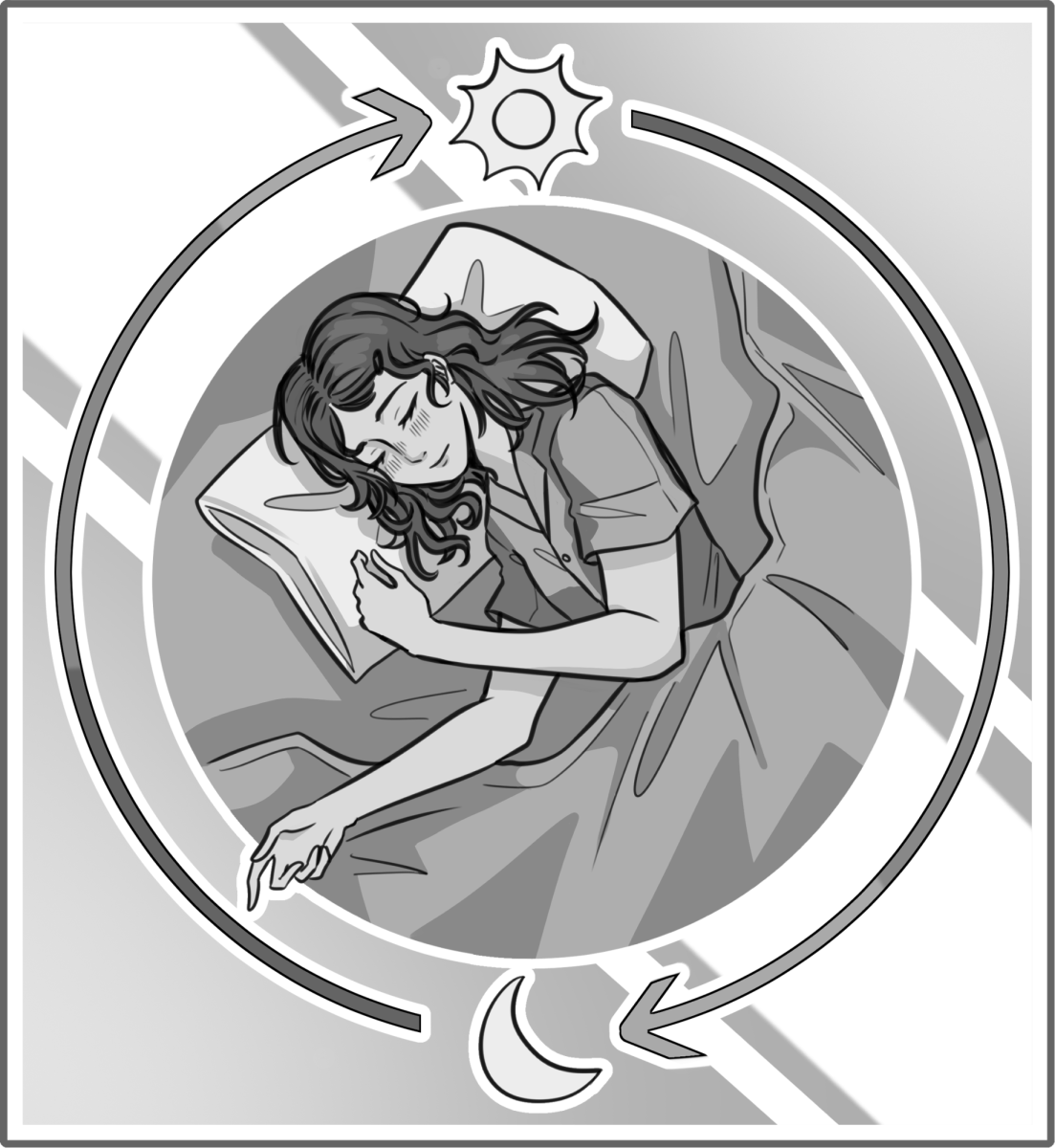
According to the CDC, around 72.7% of high school students in the United States do not sleep for the recommended amount of 8-10 hours – a health necessity. Whether from balancing homework and extracurriculars or simply scrolling on social media all night, teenagers often suffer from sleep deprivation by going to bed late and waking up early for school.
For many, however, the true issue lies in their internal body clocks. Also known as circadian rhythms, they repeat around every 24 hours and help regulate basic biological functions in humans – the most fundamental ones being sleepiness and alertness. During adolescence, they naturally shift and thus disrupt regular sleep times, leading to students staying up late. Understanding circadian rhythms and the lifestyles that worsen them as a cause of sleep deprivation in teenagers is essential in order to alleviate it.
Circadian rhythms are different in teenagers than children and adults due to hormonal shifts during puberty. Studies by Mary A. Carskadon, an American sleep researcher, found that adolescents begin producing melatonin later in the evening than younger children. This changes the timing of the “clock” controlling circadian rhythms, not only shifting sleep windows backwards but also peak alertness time.
Adults often underestimate this biological delay adolescents face because their own rhythms have shifted back to an earlier pattern. Lacking understanding can often lead to assumptions and confusions about the reasons for teenagers consistently facing sleep deprivation.
Parents need to be aware of the reasons in order to provide support to reduce the delay as much as possible. Although default circadian rhythms cannot be changed, they are influenced by other controllable factors.
Using devices during nighttime further delays the body’s clock due to the blue light they emit, which signals the brain to stay alert. This primarily affects the circadian rhythms in adolescents, especially as most use phones before going to bed. Teenagers should limit electronic usage as much as possible during nighttime since they reinforce teenagers’ already late circadian timings and make it even harder for them to feel tired.
Additionally, because school starts early in the morning, many teenagers attempt to “catch up” on weekends by sleeping in. This creates a pattern of shifting wake times, or social jet lag – a mismatch between the body’s internal clock and social schedules. If schools do not work to facilitate student schedules, the cycle of interrupted sleep can cause disturbances in learning.
According to the Sleep Foundation, fluctuating bedtimes confuse the circadian system and make it harder to fall asleep consistently during the week. Many teenagers spend the start of the week trying to readjust from a time shift created by their weekend routines, perpetuating the unstable sleep patterns.
In response, schools such as SCHS now start at 8:45. Some might argue that this is enough to prevent sleep deprivation – major imbalances in circadian rhythms would primarily rely on personal habits and thus shift responsibility to students to manage their time. This perspective, however, overlooks how strong the circadian delay is during adolescence.
Later start times make a difference, but students still wake up before their bodies have completed their sleep cycle. Students with additional heavy coursework, extracurriculars or family responsibilities struggle even more to work around the delay. The nuances in circadian rhythms mean that one solution cannot solve sleep deprivation in adolescents. The first step to addressing the problem relies on a better understanding of how circadian rhythms function.
If circadian rhythms continue to be pushed out of sync, teenagers will struggle with insufficient sleep, eventually causing problems with focus, memory and emotional regulations as well as long term physical processes in the body. Students should understand their circadian rhythms and its role in their sleep deprivation in order to create a strategy that works with their default biological clocks.