

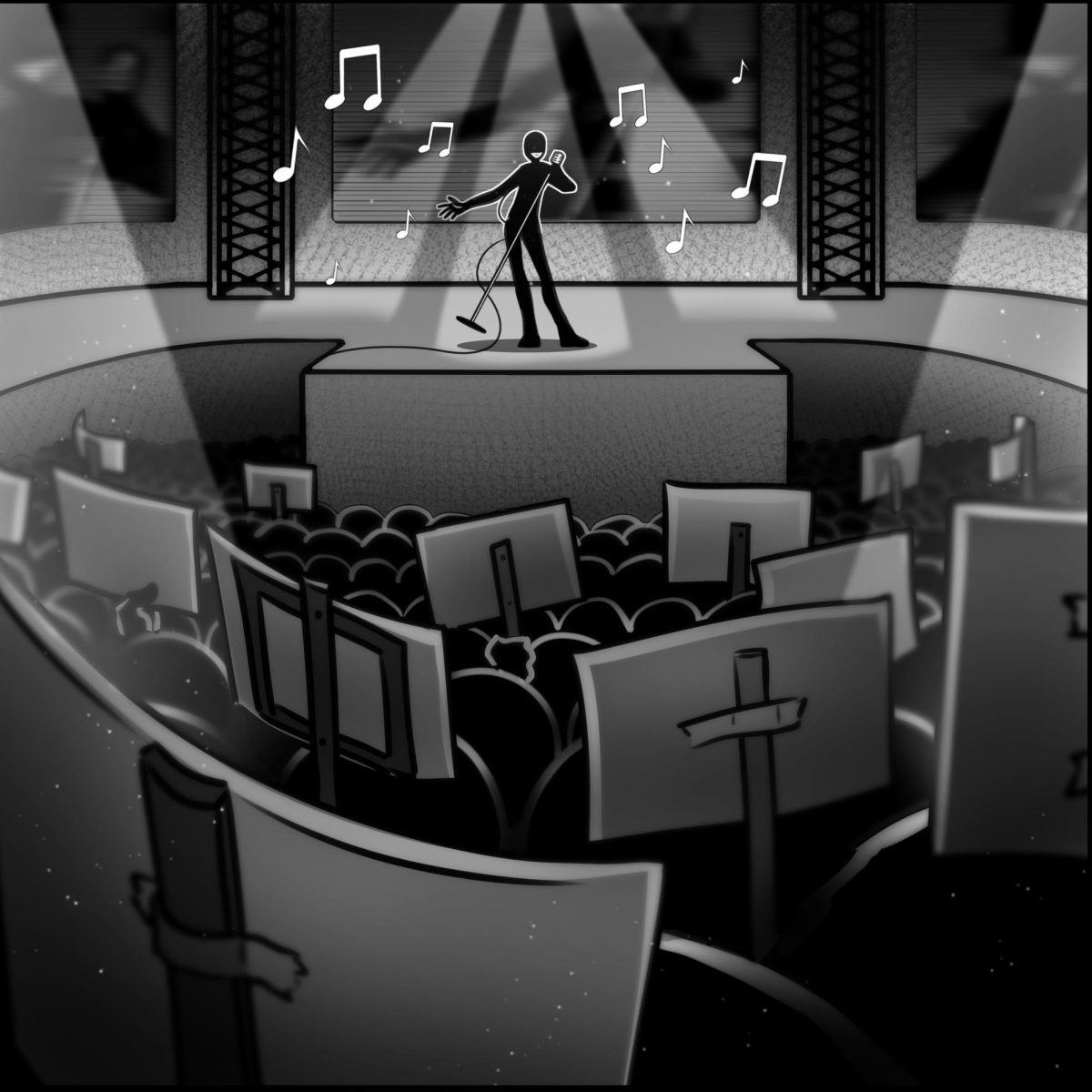
Music can shift the course of mankind and encourage societal change. Brilliant songs can reduce a man to tears or to violence, to advocacy or prayer.
Historically, music reinforced devotion and the social order while ensuring unity between the people. Ancient Greece is often a period defined by its religious endeavors, and music of the time often acted to reinforce belief. The Greeks also abided by a Doctrine of Ethos, believing that music was central to building ethics, an education and true harmony among all. These powerful ties to soul and character reflect how, at the time, music was a vehicle for sculpting what society would deem “good people.”
Today, the widespread purpose of music has shifted drastically, in part because of the vast nature of modern society. With the internet, people across cultures have been enabled to see one another and assume different perspectives of the human experience.
This phenomena is one of a few reasons why most music no longer purports an ethical imperative – the interpretations of “good” are so various it can only be popularized through its most basic characteristics as discussed in the postmodern social theory. Society’s secularism has also advanced through the time, with sociologists like Max Weber remarking on how many Gods were left in the dark ages of humanity, making it difficult to prescribe religious agendas and morals.
Yet, this is not to say music has been disempowered or disregarded. Rather, its purview has shifted.
Prejudice and injustice are present throughout every society but have been increasingly highlighted in modern settings. Through initiatives like Black Lives Matter and #MeToo, music continues to create platforms for people to be heard. The Resounding Love Choir in Seattle is one prominent example: they highlight inclusivity by being both multiracial and interfaith, prioritizing equality in worship as opposed to any specific belief system.
Music today, as it once did long ago, continues to promote an agenda of unity. It does not, however, do so with a particular standard of personhood. Rather, it highlights the distinctions that make everyone an individual.
Ubiquity in modern music also plays a central role in its present day uses and development. Streaming and social media platforms allow messages to reach global audiences instantly, meaning that music is not restricted to a specific audience. Through the merging of culture, goals for society become more intermingled and agendas become both broader and more singular.
Unlike past institutions, music is no longer just governed by the elite. Now, anyone is able to control a narrative, and artists are given more voice in the media. Kendrick Lamar is one famous modern artist who uses his voice to confront racial injustice through systemic oppression, making political statements that disparage some government conduct.
Conversely, a recurring theme regarding music is its potential in political satire. In Ancient Greece and Medieval Europe, music was used by poets and play-wrights to criticize their lords or kings. Aristophanes is one Greek playwright and satiricist who used his music to expose hypocrisy within high society.
While impactful then, music now plays an even bigger role in dismantling unwanted authority. As democracy prevails in much of the world and people’s natural rights to free speech are more widespread, they are more empowered to speak out against governments.
Modern protest music surrounding U.S. participation in the Vietnam War is one prominent example of music challenging government authority. It led to much public dissent and disapproval that the U.S. government faced extensive pressure to reevaluate their goals.
Combined with its proclivity to emotionality, modern music is able to make a much bigger impact on today’s society than it has previously. Emotions are ingrained in all people and empathy is what truly has driven social movements.
Songs like Bob Marley’s “Redemption Song,” Bob Dylan’s “The Times They Are A-Changin’” and John Lennon’s “Imagine” have sparked extensive movements concerning the rights of minorities, the working class and pacifists. While all people who participated did not identify with the minority in question, having a song that illustrated the necessity of said movement was enough to bring them together to help.
Some critics argue that agendas in music are often performative or for profit. One common example is musical activism during times of high political awareness and engagement, like Pride Month, that give no actual contributions to the movement itself. Yet even when an artist’s motivations are superficial, the impact is not.
Critics concerned about this phenomenon are right to look down on the money hungry individuals who run the music industry, but it is also important to focus on the impact of the music itself. In the song “Born this Way,” Lady Gaga was accused of performative activism, yet the movement gained more traction and was able to amass widespread support for the LGBTQIA+ community.
Ultimately, music is sound that resonates with man as a collective. Since the dawn of humanity, the power of music has been wielded to promote specific agendas throughout different societies. From Ancient Greece to the modern world, music has drummed a path to enlightenment concerning societal outlook. As technology grows and innovation continues, the presence of music is guaranteed though its agenda is still to be known.