

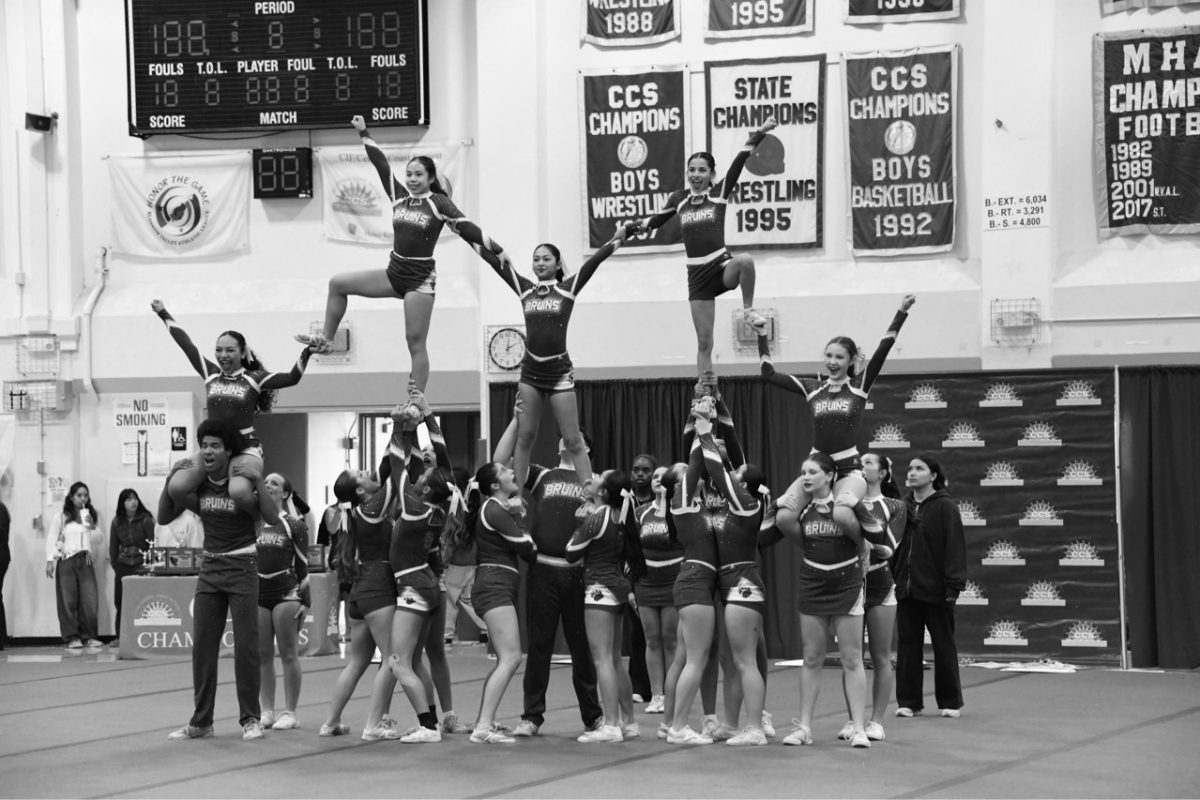
Cheerleading is often at the center of SCHS spirit, carrying the responsibility of supporting sports through their encouragement. Sideline and Traditional Competitive Cheer, however, still struggles to receive the same level of recognition as more popular sports on campus despite their commitments and titles.
On January 17, 2026, TCC won the Central Coast Section championship for their second year in a row, but some believe cheer still lacks the acknowledgement it deserves.
Sophomore TCC cheerleader Mackenzie Dickerson noted that individuals often do not know TCC is a separate team from sideline cheer.
“A lot of people get it mistaken. I feel like that’s kind of difficult for us because we put in all this extra work, and people just don’t even consider it a sport,” Dickerson said.
Assistant cheer coach Casey Abrigo explained TCC is characterized by its competition where teams are judged on various criteria. Sideline cheer, however, has an emphasis on supporting other sports teams during their games.
“It’s (TCC) much different than sideline because it’s not just a pom team that’s cheering on another team. They’re actually competing against other teams,” Abrigo said. “There’s different things being judged and different expectations for each routine based off of what you’re competing in.”
Junior TCC cheerleader Carolina Rivera also believes individuals misunderstand the labor it takes to be a part of TCC.
“TCC is much more difficult, and there’s more skill that comes with it. It also has to be taken a little more seriously because it’s considered a sport,” Rivera said. “I think TCC definitely requires more effort. It’s more of a responsibility than sideline. Sideline takes a lot of effort as well, but TCC definitely takes more of your time.”
TCC is still relatively new to campus as it has been a sport for only two years, which Abrigo believes impacts the team’s overall reputation.
“Thankfully, we’ve won 100% of the competitions we’ve been to. Because we’re brand new, I don’t think a lot of the campus knows what we are, and also I don’t think a lot of people know what TCC means,” Abrigo said. “I think that the more we win and the more we’re on campus, the better recognition we’ll get.”
While TCC is considered a sport at a California Interscholastic Federation level, sideline is considered a club and struggles to gain recognition as it lacks a competition component and interaction with other schools.
“I think that they (TCC and sideline) should both be considered a sport, but unfortunately, that’s decided at a state level, such as at the CIF level.The only difference is that sideline is not competing one on one with another team,” Abrigo said. “I think that’s the one thing holding them back right now. But when it comes to skills and effort, they put in just as much as any other sport.”
CCS champions is an accomplishment only a handful of SCHS sports teams have earned in the past few years, and cheerleaders including Dickerson enjoyed seeing their dedication pay off.
“Our coaches are very passionate about us winning, so we put in a lot of work,” Dickerson said. “It was a good feeling because we’re actually being recognized for our winning and accomplishments.”
Rivera observed that progress in TCC’s reputation has not stayed stagnant and the team has been given more opportunities and rewards, but progress is slow.
“Last year, we did get recognized by the city of Santa Clara, and this year, we’re given a little more recognition because they’re giving us chances to get things like CCS rings,” Rivera said.
Abrigo hopes that after the attention their CCS wins have brought, more athletes will join the team and help solidify cheer’s reputation.
“This is a place to come if you want to be a competitive cheerleader. We (want to) start to see more of those experienced cheerleaders come out at our school, girls and boys,” Abrigo said. “I think that we’re gonna continue to grow, and we’re gonna continue to fight. I think that we’ve got an excellent group of coaches and choreographers behind us, and I think that we’ll continue to grow.”