

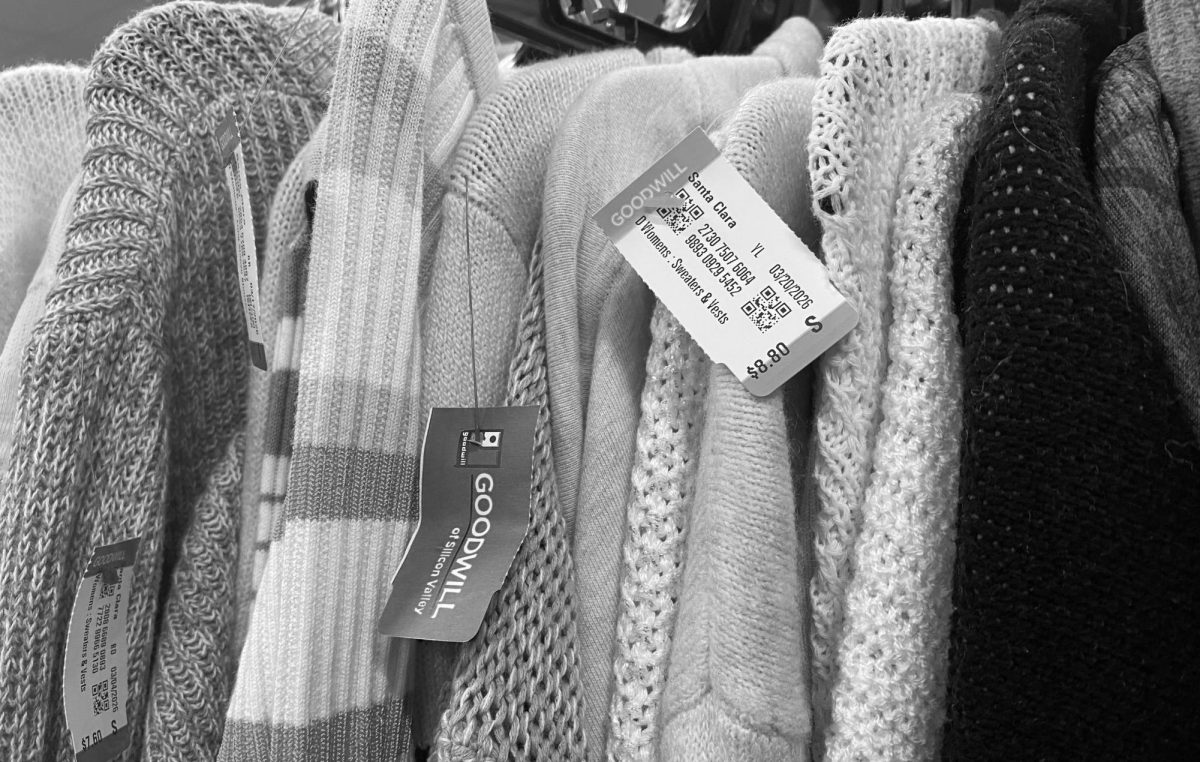
A trip to the thrift store once meant many shoppers leaving with a bag of clothes under $20. Now, some say those same items come with price tags that feel closer to retail value.
As thrifting grows in popularity, customers are noticing higher prices and a shift away from the original purposes of secondhand shopping. Junior Angeline Nguyen views affordability as being central to thrift stores, especially for customers who rely on them.
“I think the entire or the original premise of thrift stores is to get cheap clothing,” Angeline Nguyen said. “That’s why a lot of people thrift. Not only are they just broke teenagers like myself, but also families that may not be able to afford something that is like $30.”
While thrifting has become trendy, it is still a necessity for many. Junior Joy Ekpo explained that thrift stores are beginning to increase prices due to thrifting’s overall popularity, which mainly affects those who rely on secondhand shops for clothing.
“It kind of disappoints me because the whole purpose of a thrift store is to maintain affordability for those who probably cannot shop within the same prices,” Ekpo said. “Because of the popularity it’s bringing, stores are starting to do that just for the thought of or for the trend.”
Despite concerns about rising prices, some customers find thrifting affordable when there are discounts. Sophomore Yaretzi Samano believes thrifting is affordable but some items can be on the higher end.
“I think it’s affordable when they put tags on discounts. I still think it’s affordable, but I think certain items might be out of people’s budget for sure,” Samano said.
Others acknowledged that thrift stores still operate as businesses and may need to adjust pricing to stay open. Science teacher Suzanne Miller-Moody explained that nonprofit thrift stores must consider their financial sustainability.
“They’re trying to maintain a business, and if they’re trying to do that, they need to have a price mark up,” Miller-Moody said. “If people are donating their clothes – I know I’ve donated clothes – and I don’t care what happens to them once they are gone. It’s not in my hands anymore, it’s not in landfill and somebody else is getting enjoyment out of it, so it’s hard to be mad.”
Senior Kyle Ferguson stated how the fair pricing of thrift store items can also depend on the objective of the thrift store itself, which can vary between providing for the community or making a profit.
“If their goal is to provide for the community, then it should not be based on sale prices. But if your goal is just to make profit, yes, it’s reasonable that they’ll base it off its overall value to society,” Ferguson said.
Angeline Nguyen understands how reselling impacts in-store thrift prices and overall business profit but emphasized the necessity for thrift stores to maintain affordability for customers.
“If people really want to resell, they could go thrift themselves and then sell it themselves, but that alone also makes things more expensive,” Angeline Nguyen said. “It’s the store that should be central to making things affordable.”
As pricing becomes a larger concern, some shoppers are questioning how technology could impact thrift stores. Many have noticed that artificial intelligence has begun influencing online resale markets, where algorithms help determine the value of items based on demand and brand recognition. Senior Wendy Nguyen explained that AI-driven pricing may increase costs.
“If AI compiles everything from online stores, it’s not gonna have fair pricing,” Wendy Nyguen said. “I don’t think it’s a great option. I think it should be actual people that resell instead of AI, or workers making the price.”
Miller-Moody also believes AI may not fully capture the reasons people choose certain items, highlighting the emotional component of shopping secondhand.
“Some of the reason people buy what they buy isn’t because of price,” Miller-Moody said. “It’s because of how it makes them feel to know that it could be theirs.”
Despite rising prices and changing trends, thrifting, for some, retains value beyond cost. Angeline Nguyen encouraged individuals to thrift with the intention of finding fashionable pieces to curate an authentic style, while emphasizing the awareness of affordability.
“If people are looking to have unique styles, I think thrifting would be great,” Angeline Nguyen said. “But they should keep in mind that the affordability of it (thrifted items) is dependable from person to person.”
Wendy Nguyen urged secondhand shoppers not to overconsume at thrift stores even though price tags are low in comparison to retail prices.
“Thrifting is good, but if you’re gonna overconsume in that aspect too, it’s like ticks away the entire point,” Wendy Nguyen said.
Miller-Moody finds the popularity of thrifting in younger generations indicates a shift in people’s perspectives of secondhand shopping.
“I like that there’s a shift in people’s perspective about what thrift shopping looks like and what it can mean,” Miller-Moody said. “You can find some really cool stuff at thrift stores.”