

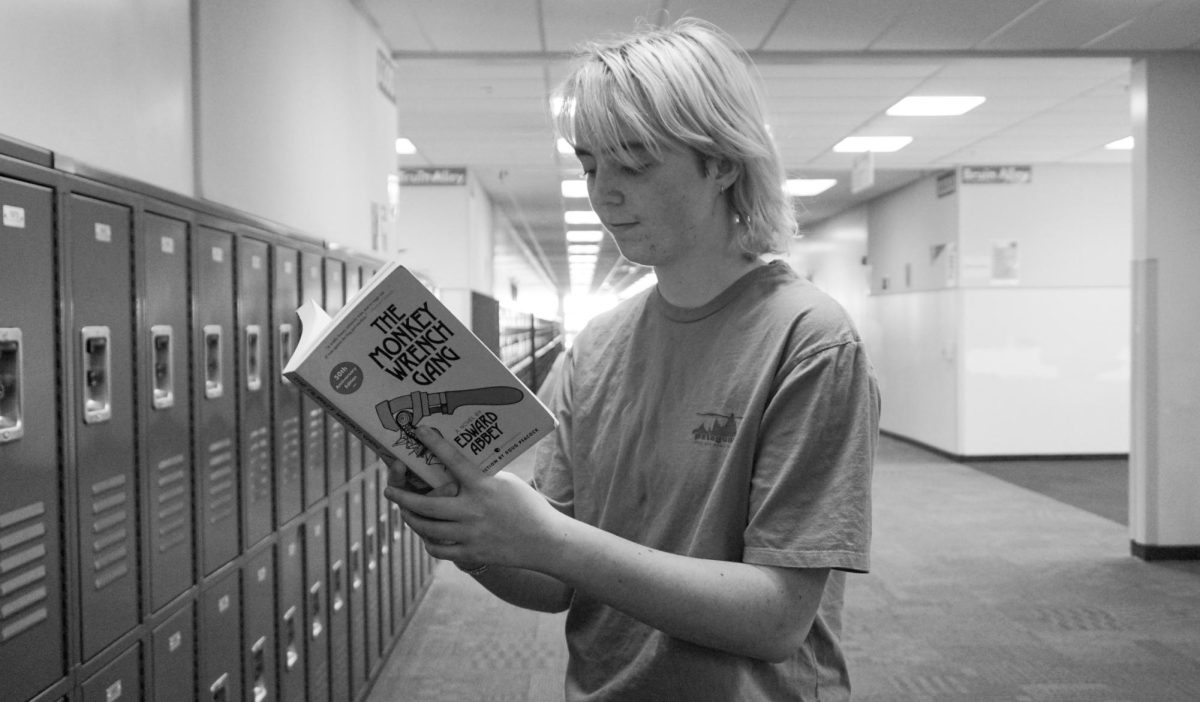
“The Monkey Wrench Gang” is a fast-paced, car chase of a novel, and author Edward Abbey ties it all together with cogent environmentalist messaging. Made clear by Abbey’s history of loud protest, “The Monkey Wrench Gang” is a direct reflection of his ideals and beliefs. Abbey described himself not as a nature writer, though his descriptions of the West are lilting, but an author interested in exploring the struggle for personal liberty in a state practically run by unelected corporate tech elites, using wilderness as more of a backdrop to his stories.
Following a rag-tag group of imperfect people, Abbey explores the struggle for liberty against a techno-industrial state. Each is motivated by a common interest: the return of the grand American landscape from the greed and corruption that plagues its rocky valleys and mountains.
In the novel, Abbey details the chemical-ruined rivers, dams that turn once vital river beds into dust fields and the colossal strip mining of once vast, open land. Inspired by watching the beautiful lands they once knew slowly erode from corporate corruption, the main characters, or “Monkey Wrench Gang,” set out with lofty goals of eliminating industry in the American West, aggravate local law enforcement and destroy equipment in the process.
The novel begins with two epigraphs that perfectly embody the message of this story: “…but oh my desert/yours is the only death I cannot bear” from Richard Shelton and “Now. Or never” from Henry David Thoreau. Through the arc of the gang, Abbey suggests that real change that turns tides and uproots oppressive figures does not happen in the halls of government but on the ground by the average person. He dismisses the idea that one must wait to be perfect, to never contradict themselves, before they take action. Against forces that seem too big to take on and officials willing to turn a blind eye for the right price, Abbey leaves the reader with one last impression – it is now or never.