

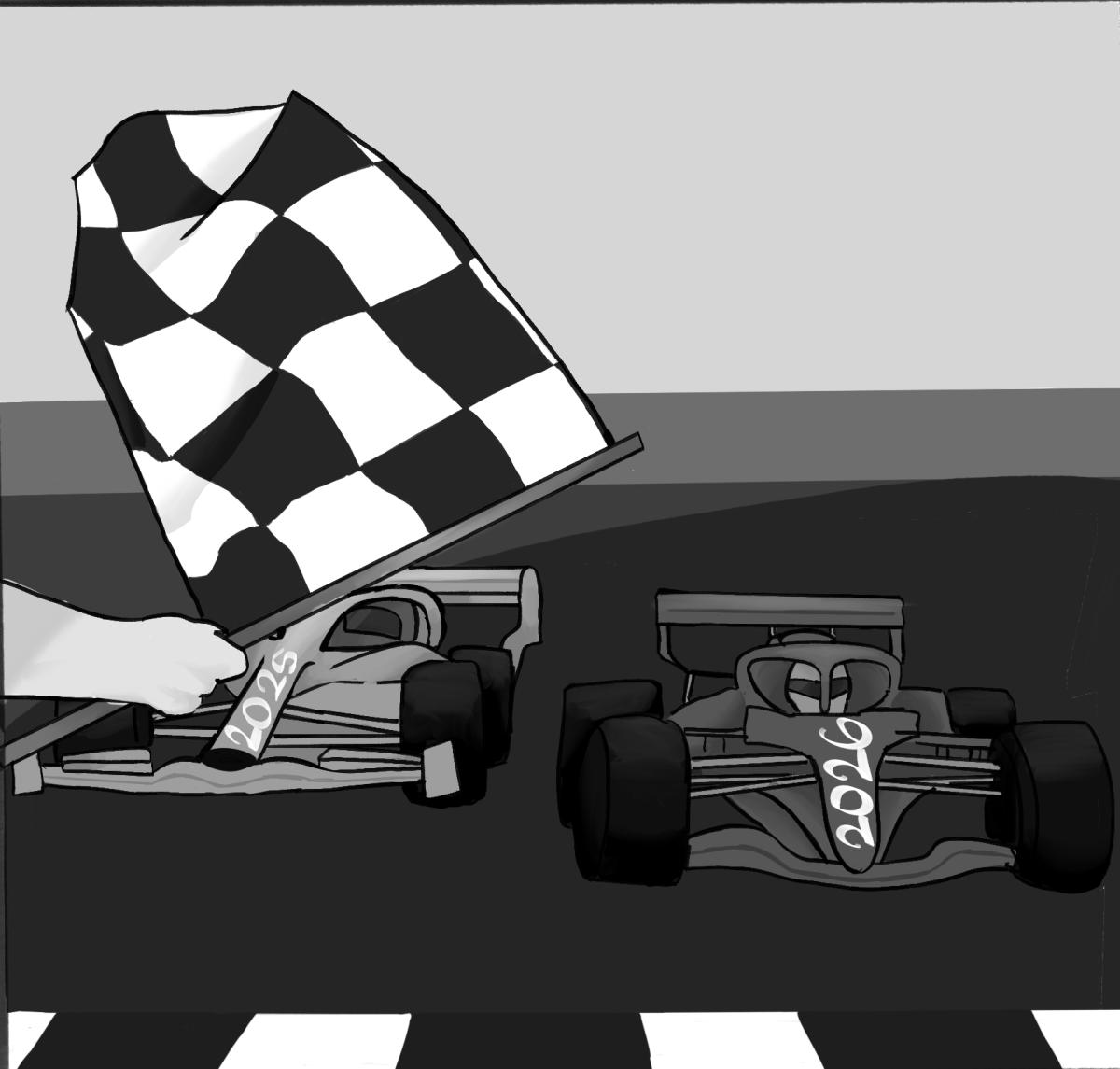
Although not always viewed as a traditional athletic sport, Formula 1 racing is adored by many global audiences. Teams are composed of two drivers and two vehicles of the same model. Drivers competing individually but still working together to support their constructors, the brand that builds their vehicle and sponsors them. When large changes are made to the sport, fans often have differing thoughts about what this will mean to the season to come.
F1 has faced numerous challenges socially to be considered a sport. Many argue F1 falls short in terms of athleticism and that the vehicle itself is competing rather than the driver. Social science teacher Hao Pham, however, believes that F1 is a valid sport due to the workload drivers and constructors put into every race.
“It definitely is not your traditional sport as far as football, basketball and everything else. It’s a sport because it’s competitive,” Pham said. “There’s a different physicality involved and in conjunction with the intellect.”
Sports often require extreme training and practice, and F1 is not exempt from this. Sophomore Kedar Kamath found the extent of training necessary to consider when qualifying F1 as a sport.
“I think with a lot of sports that are considered sports, you always have to do a lot of practice, a lot of strength training and a lot of endurance. Sure, you could argue that they’re just sitting in cars and driving in circles, but they have to be strong because of G forces and stuff like that,” Kamath said. “It requires a lot of effort physically and mentally, which is common with a lot of sports.”
For the 2026 season, F1 has undergone considerable changes. The Fédération Internationale de l’Automobile has set new regulations for racing vehicles. Primary changes include vehicle size decrease, a new distribution in power units and the replacement of the Drag Reduction System with active aerodynamic features.
The new regulations have created controversy among the F1 community, leaving fans, drivers and teams in limbo. Senior Jeeva Seeniraj believes the changes have created contention due to the removal of the Drag Reduction System because drivers and teams now must focus their energy into creating overtaking strategies.
“I think it’s gonna be interesting to see because the battery has been shown during pre-season testing to drain pretty fast, which means that drivers at the end of straits are gonna have to focus on recharging it,” Seeniraj said.
Recent changes have made the viewing experience of F1 more similar to that of Formula E, a division of motorsport that races electric cars, due to the techniques, sound and the overall way drivers and teams race. Seeniraj feels the changes, although a bit too similar to Formula E, have their advantages for the F1 experience.
“I feel like Formula E already exists for a reason, so going 50-50 wasn’t necessarily a good thing. But I don’t think it’s going to take away from the racing,” Seeniraj said. “I think we’re gonna get a really big shakeup. There’s gonna be a lot more fun when you watch the race for the fans.”
Many feel the changes have impacted fans’ and teams’ ability to predict the 2026 season. Senior Sharvil Kulkarni viewed the changes as too abrupt and significant, and the true intention behind them is not to appease the community but give advantages to specific manufacturers.
“I think they’re trying to change too much at one time,” Kulkarni said. “I just wish these changes weren’t as rapid because as it stands, I feel like they only did this major overhaul so that the big manufacturers of Audi and Cadillac could start off on an equal playing field and would see an incentive to continue in the sport.”
Despite his dislike for the changes this season, Kamath thinks the new regulations put in place have the potential to be highly successful for the future of F1.
“There are gonna be fans who are like me who prefer the older race generations without all this electric stuff, but I think there’s also gonna be fans who are happy about the environmental impact and how they’re trying to be more sustainable in Formula 1,” Kamath said.
Regardless of the mixture of excitement and nerves from fans, F1 audiences are in for a new wave of entertainment and intriguing modifications for the 2026 season.
“I think in general, they’re just interested to see if the racing action can get better. As long as there’s a decent show and not 15 out of 20 cars retiring, I think they’ll be pretty content,” Seeniraj said. “As long as the action is good, the fans are going to be happy. There’s always gonna be buzz and stuff going on in the media.”