

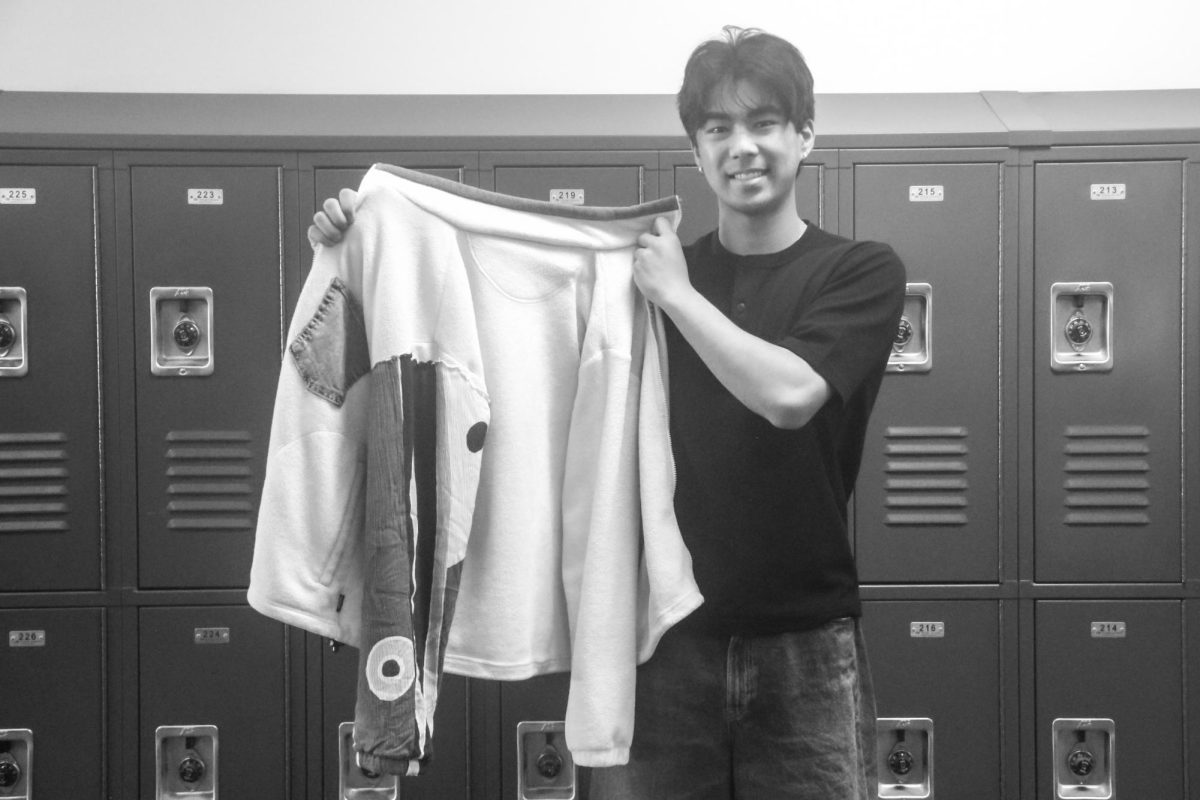
With increasing prices and often unappealing clothing designs in stores, many have taken it upon themselves to create their own pieces. Whether it is through alteration or embroidering, they are able to personalize their style and create clothes that are meaningful to them.
For some, like sophomore Layla Lemus, DIY-ing clothes is a viable and enjoyable option, especially given that it is more cost-effective than buying similar clothing from stores.
“I see it all the time – I see people buying either an accessory or a clothing item, and it would come out to a super expensive price, even coming to $500 from luxurious brands,” Lemus said. “I see it and I tell myself that I can make this for like 20 bucks. I really have fun DIY-ing clothes, so it’s a bonus.”
While cost efficiency is a prominent reason many make or alter their own clothes, it can also be a form of self-expression. Junior Kainoa Wong finds that it allows him to modify his clothes to his personal liking.
“I think it just looks cool because it is a way to express yourself. It’s like an art form basically,” Wong said. “Altering clothes or doing additional stuff to your clothes (and) being able to express yourself through clothes is what motivates me.”
Like Wong, junior Isabelle Taylor Bernstein agreed, pointing out how DIY-ing her clothes allows her to fit them to her unique style and curate the perfect wardrobe without worrying about having to go shopping.
“I love colorful and funky clothes because I feel like most people just wear sweatpants, which is totally fine, but I think wearing creative and fun stuff is a form of self-expression,” Bernstein said.
DIY-ing has also brought many people together in a community where individuals can share and exchange ideas about clothing. English teacher Daniel Eaton shared that music venues are a popular setting to try out DIYing and wear their new clothes.
“I like to go to this legendary music venue in Berkeley at 924 Gilman, and there are a lot of people that you will see with their own DIY clothes, like DIY patches, or band merch,” Eaton said. “For smaller shows, I feel like it’s less about trading stuff and more about bringing your own self-expression and your own gist to it.”
On campus, BOTC is a common event where many students design and alter their shirts, often based on the class themes. Wong explained how many students try adding their own creative twist to their shirts for the first time.
“For BOTC, it is always really fun to express who you are through this shirt that everyone gets,” Wong said. “Then they can all express who they are through altering it and adding their own flair into it.”
Although DIY-ing clothes may seem like a daunting skill to pick up, Lemus finds it to be a forgiving medium. She noted that there is always room to try and grow from mistakes, especially when it comes to designs that take time.
“I feel like it’s part of the process. There have definitely been times where I felt like I would mess up a bit, but in the end, it’s just clothes. You could just try again,” Lemus said. “It’s okay to mess up sometimes.”
With DIY-ing clothes gaining popularity, Bernstein encouraged curious students to try it out. Especially for students interested in picking up a valuable life-long skill, modifying and creating one’s own clothes can be the perfect creative outlet.
“I do think it’s a great skill to have because it is not only fun to wear, but also it is more accessible. People who maybe don’t have the money or the resources to buy brand new, super nice clothes, they can thrift and alter their colors themselves,” Bernstein said. “It’s just fun to be creative… and it’s also fun to wear it and tell everyone, ‘I made this’ too.”