

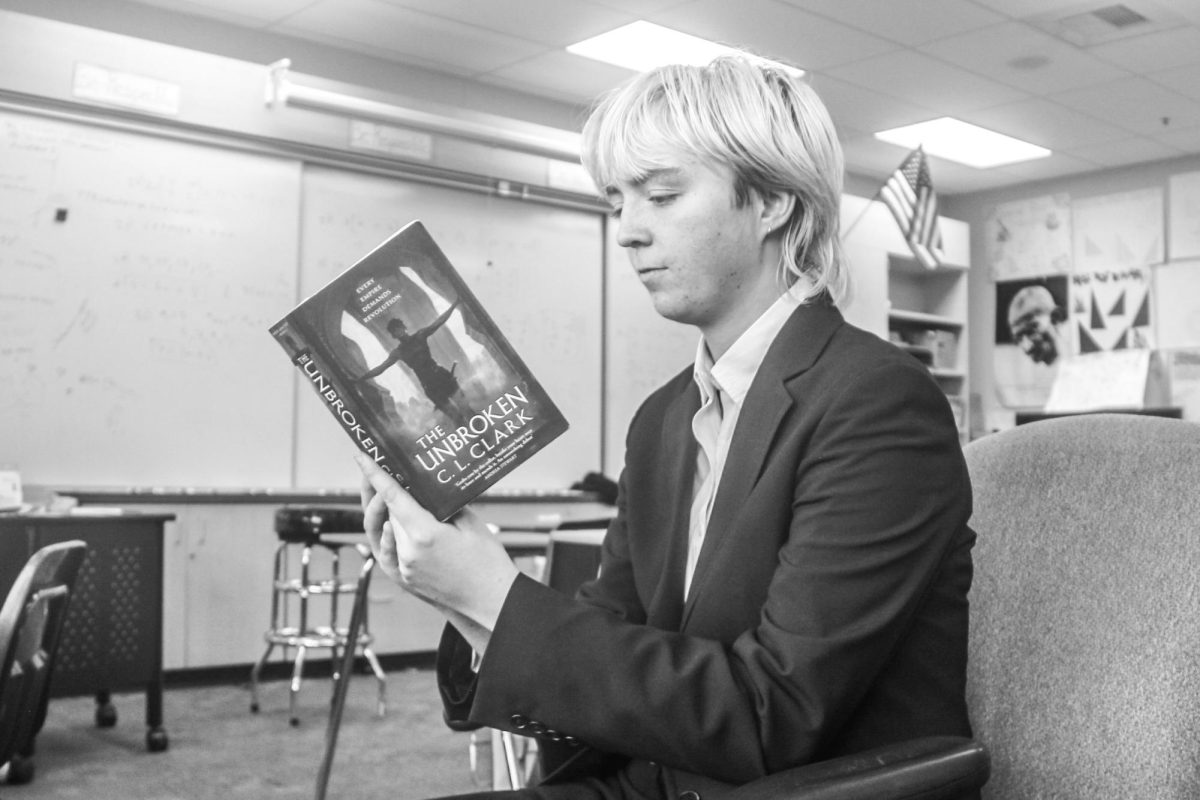
Set in El-Wast, a city on the brink of violent revolt, C.L. Clark’s split-perspective novel “The Unbroken” weaves an atmospheric story of magic, greed and the ties that bind all people together. The city and its nation, Qazāl, draw inspiration from North African culture, linking themes of colonialism and identity loss between the fictional setting and real-world experiences.
One of the main characters is Touraine, who was kidnapped as a child along with scores of others and trained to become a soldier for the Balladairan army. As the novel progresses, Touraine is forced to recognize her Qazāli roots and struggles between remaining loyal to the people who raised her and the culture that feels like home.
A second perspective follows Princess Luca, sent to restore order in the city to prove herself capable of one day sitting on the Balladairan throne. Blinded by the promise of power, she betrays not only her own people but also risks the lives of thousands of Qazāli.
Luca’s character throughout the novel proved to be, in part, unlikable, especially when she succumbs to her greed and selfish motivations. Arguably, however, I think that was the point of her character – she represents the other side of these stories, someone who views colonized cultures as something to extract from rather than understand.
Fantasy novels with social and political commentary are some of my favorite books, and “The Unbroken” has earned its place. It is at times a political fantasy, exploring magic and legends lost to time, and at others, a complex discussion of real issues of colonialism, racism and oppression told through the conflicts of Qazāli and their Balladairan occupiers.
No character in this novel is perfect, and each must learn to own up to their past, reconciling it with their future. In this way, Clark constructs a twisting narrative of self-discovery, incorporating the systems of avarice and hunger that have long defined our world.