

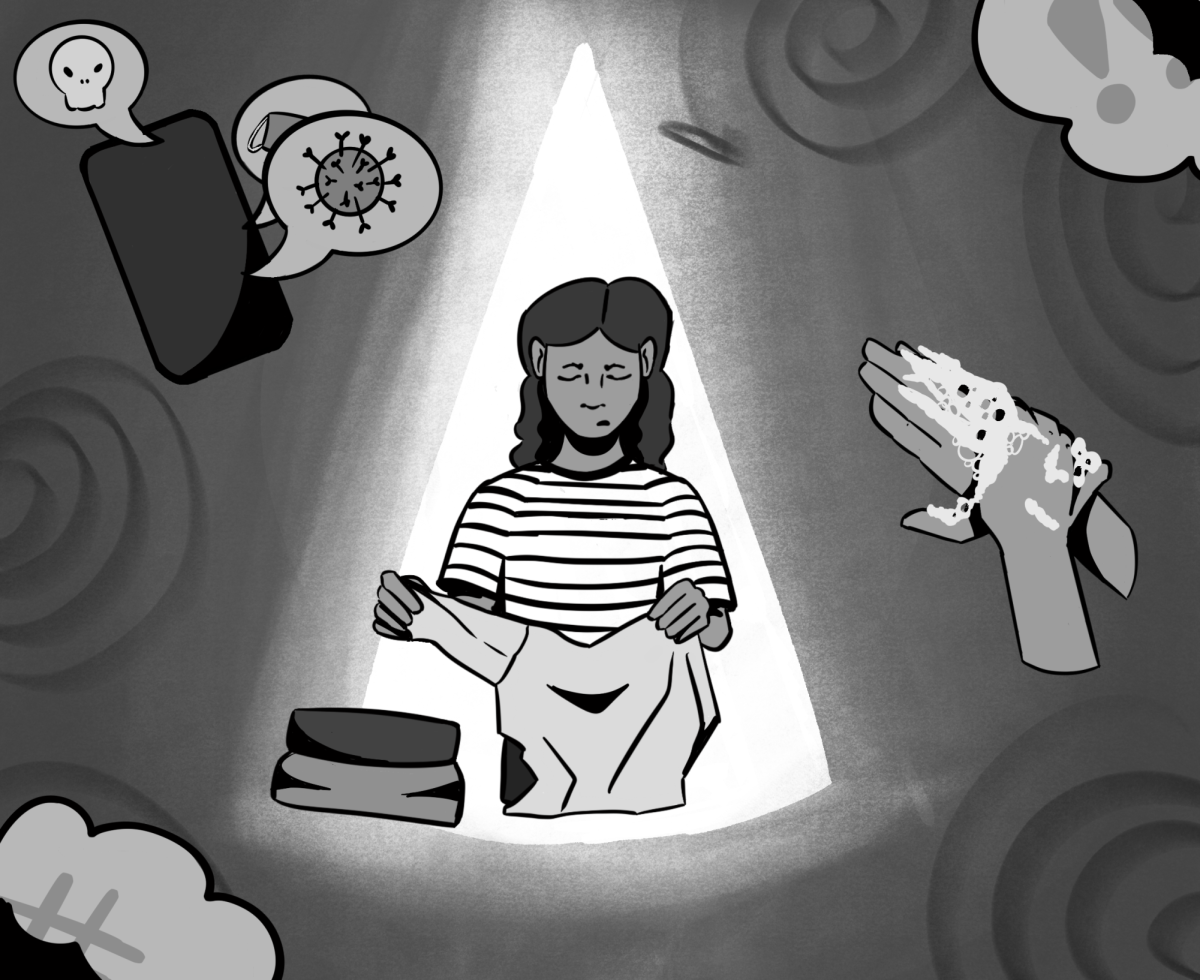
When it comes to disorders in books and movies, representation is rarely accurate, caught between exaggerating and downplaying symptoms. With characters like Arthur Fleck from “The Joker,” critics have pointed out the stigmatized nature of associating psychotic and personality disorders with violence. In other cases, like the film adaptation “Girl, Interrupted,” disorders are selectively portrayed in a way that many believe romanticizes the condition.
The double-edged reality of representation has made it difficult for audiences to understand and accurately perceive mental health disorders. While stigmatization has prompted much discussion, the harms of glorifying disorders have not been spotlighted to the extent they should be.
In “Girl, Interrupted,” the main character, Susanna Kaysen, deals with Borderline Personality Disorder and is admitted to a psychiatric ward for a temporary stay. Although the film was able to capture components like self-discovery and bring attention to BPD, Psychology Today reported that the movie left out important details of the disorder in an attempt to avoid what they viewed as “less-attractive” symptoms.
Though many argue about the extent to which this is true, most commentators acknowledged how the dramatic and rebellious symptoms such as impulsiveness and mood swings were more prominent in the film than aspects like fear of abandonment. Unable to see the full picture, viewers who consider dramatic traits as desirable may be led to perceive a glorified and simplified version of BPD without fully understanding the lived experiences of those with the disorder.
On a more extreme level, some works have also dehumanized disorders by using them to supplement a personality type or character archetype rather than to shed light on the condition. When this happens, it also causes audiences to subconsciously categorize disorders as acceptable or not based on how romanticizable they are.
One common archetype, for example, is the “brooding” or “mysterious” main character. In an attempt to give their character the necessary depth often associated with an enigmatic character, some authors and filmmakers resort to using disorders or including a subplot of trauma solely to further a character’s personality.
This is not to say that a mental illness needs to be the main focus of a novel or film if it is mentioned. It is important, however, that it is not just a term that is thrown around to help give a character more depth, or help people believe they are “cool” or “mysterious” enough.
Other archetypes, such as the “mad genius” and “sad girl,” have also simplified neurodevelopmental and eating disorders to accessories used to glamorize a personality and “enhance” it. It is almost like a character can only have depth when they have trauma or depression, ultimately undermining the experiences of those who live those everyday realities.
An article by the Seattle Anxiety Specialist claimed that many films feature an “overrepresentation of savant-like skills.” While 46% of characters with Autism-Spectrum disorder across 26 movies from four continents demonstrated savant-like skills, only 10-30% of the ASD population actually demonstrate them. By spotlighting these skills and creating the assumption that creativity will always come with ASD, the disorder is glorified and the worth of those with ASD may actually be determined by how many savant-like skills they portray.
According to a PubMed Central study, 30% of Gen Z self-diagnosed in part due to influence from the media and acknowledged that these adolescents adopted certain traits from the fictional characters they idealize. It is quite possible that the disorder itself was one of the traits they were trying to mirror. If an individual looks up to a certain character whose personality was furthered by a plot-driving disorder, they can deduce that having that disorder is necessary to embodying the persona.
Some argue that self-diagnosis is not completely negative because it can help individuals identify symptoms and ask for professional support. In certain cases, this can be true, but armchair medicine becomes harmful when one chooses to delay seeking professional help or prescribe a medication to themselves.
Although representation of mental disorders has increased and improved significantly in the past few years, there is still more to be changed. As a counter-response to stigmatization, romanticization became a way to view disorders more positively. In its own way, however, this has caused more harm by reducing the nuanced and complete understanding of what each condition entails.
Since entertainment fiction is often a direct reflection of society breaking down complex topics, it is imperative that accurate representations of disorders are sought out, even if it is not the primary focus. Mental disorders should not be watered down to a mere prerequisite for viewers to consider a character worth watching.