

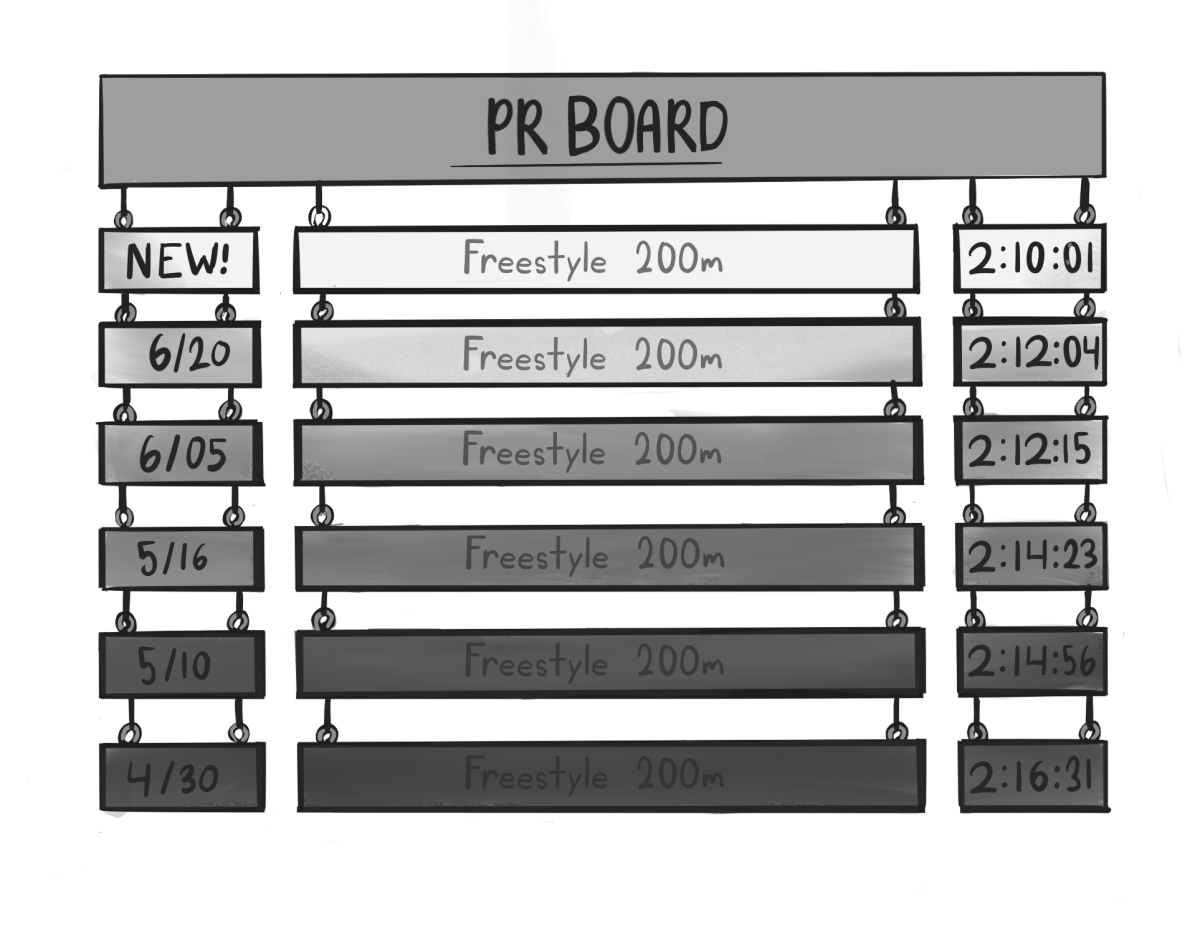
Personal records often serve as a motivational catalyst for athletes in many sports. They allow individuals to measure their performance over time and reflect on their training and competitions. For many, reaching a new PR is rewarding because it proves that the work they are putting in is paying off.
Track and field sprint coach Eddie Sumpter explained how athletes often set baseline goals at the start of a season to help track progress and development.
“Early in the season, you would probably set a goal,” Sumpter said. “You may not have it yet because you have to start the competition. Once you have a base, then you start looking for PRs.”
With a goal set, athletes use it as motivation to improve their skills and PRs. This approach, however, can cause some to put too much pressure on themselves early on. Sumpter revealed how some athletes take their goals seriously, sometimes setting unrealistic ideals.
“It depends on the athlete,” Sumpter said. “If they’re very competitive, if they’re extremely motivated, then yes, they will put pressure on themselves, and some athletes will feel they have to PR every competition, which is not going to happen.”
For senior track and field athlete Siena Zylstra, breaking a PR is an enjoyable experience. Zylstra explained how reaching a goal makes countless hours of training feel worth it.
“It feels really great when I do (break a PR) because I work really hard to achieve that, and knowing that my hard work is paying off means a lot to me and to my dad,” Zylstra said. “But when I don’t meet them, it just kind of feels like I didn’t push myself hard enough, or I didn’t do what I needed to do.”
Wrestling athlete junior Jose Flores pointed out that while failing to reach a goal might be discouraging at first, it becomes a source of motivation that prompts athletes to put in more effort in the future.
“It really sucks but I feel like missing that goal opens your eyes even more, realizing you have time (to work on) it,” Flores said. “When you realize that you miss it, you get more motivation, saying you’re going to go harder this time or next time.”
While PRs are defined by an athlete’s individual goals, at the end of the day, their performance affects the entire team. Flores explained how personal and team success work together in wrestling.
“They (PRs) really help you build your momentum, and when you get to the mat, you feel confident, you feel ready,” Flores said. “At the same time, wrestling is more a team than an individual sport, so to the point where you’re gonna think you’re better than all your teammates, your whole team is just going to think of you poorly.”
An athlete’s journey is often a mix of wins and losses. Zylstra provided advice for those working toward PRs, pointing out that those achievements do not happen instantly. Instead, they require patience, consistency and dedication over a long period of time.
“It’s something that you have to keep working on. You can’t do it for one week and then not do it for the next week and then expect to PR the week you come back. It’s a progressional thing,” Zylstra said. “You have to keep going. Even if you probably didn’t progress before, you just have to put in the work through the years.”