

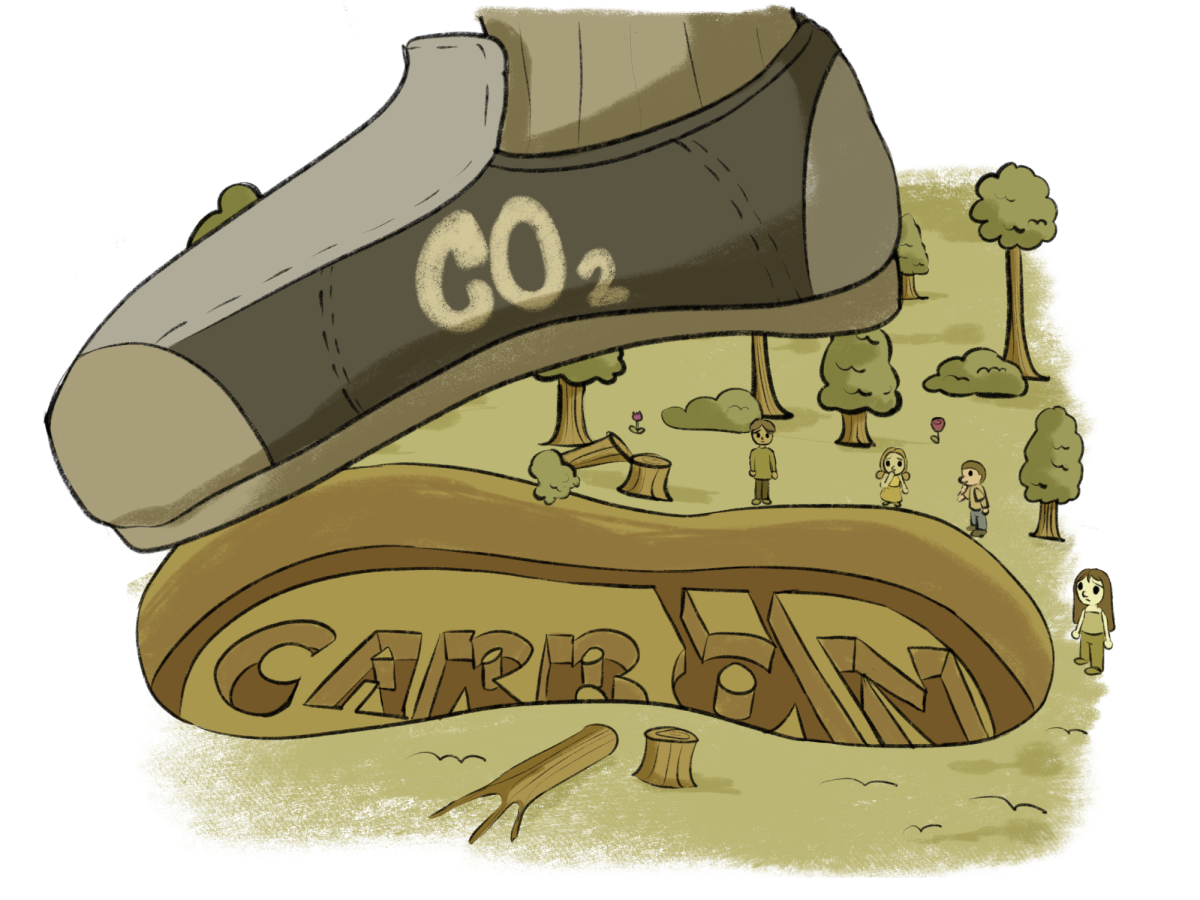
Since the 1990s, the world has emitted over 20 tons of carbon dioxide annually, which is over 7.6 billion cars worth of emissions. The outpour of carbon has contributed to the carbon footprint – the total amount of greenhouse gases, namely carbon, that an organization’s activities or a person releases into the atmosphere – which impacts the environment.
Senior Ariel Maor, who is currently taking AP Environmental Science, touched on some of the environmental consequences of the carbon footprint, emphasizing its contribution to climate change.
“The carbon footprint can lead to climate change because there’s so much greenhouse gasses that lead to negative effects on the environment,” Maor said. “Examples are ice melting, which leads to less habitats, floodings and sea level rising.”
There are various factors that contribute to the growth of the carbon footprint, and for SCHS, some include electricity and water usage. According to science teacher Suzanne Miller-Moody, water consumption is something the school could be more efficient with.
“We have so many plants that live here on campus that require a lot of watering. Why don’t we change the way we plant things?” Miller-Moody said. “Rather than planting things that require water, how about we plant things that are native and local to California and are used to adapting to the drought.”
When fresh fruits and vegetables are thrown away, it adds to food waste, which can increase the emission output. The produce is brought to landfills where waste is burned, causing more carbon to be released into the atmosphere. But there are ways to remedy the issue, with one such solution proposed by Miller-Moody.
“Sometimes, fruits and vegetables get repurposed, sometimes not. We can do a better job in reducing our carbon output by finding different avenues for food waste. I think we need to start a comprehensive composting system that addresses food waste,” Miller-Moody said.
Food consumption, beef, specifically, also has a strong impact on the environment. Recycling Club secretary, freshmen Giang Hoang, delved into the impacts of the meat industry on the carbon footprint.
“Oftentimes we eat more meat than we might be aware of. It is damaging the environment in that there’s meat, especially cows, which take up a lot of land, not just in our country, but also other countries that we sometimes import the beef from,” Hoang said. “So food has a big impact, and if we are more conscious of what we are taking in, not only does that positively impact our health, but it also helps leave behind a less substantial carbon footprint.”
Senior Anmol Singh elaborated on the numerous paths the community can take to mitigate their carbon footprint.
“Use reusable items like water bottles, utensils and containers. Recycle properly and encourage peers to do the same. Walk, bike, or carpool whenever possible. Join environmental clubs or initiatives that focus on school sustainability,” Singh said.
While there are numerous ways to reduce the carbon footprint, many are not taking the steps to do so. Hoang believes this issue is because of ignorance, that a lot of people are not educated on the impact of the carbon footprint.
“Oftentimes, when we think about climate change, the effects seem so far away because we don’t see the effects of climate change, like ice caps melting or trash and pollution in the sea, and because we don’t have those, it’s difficult to be conscious about the environment,” Hoang said.
Although the environment is suffering, there are still actions that can be taken to preserve it for future generations.
“If we can all take a more conscious effort to understand how we are going throughout our lives, how that affects the environment and why it is important to conserve it, it will help us think more about the future and take care of what we have,” Hoang said.
The carbon footprint is slowly damaging our planet, but people can take steps to alleviate the amount of greenhouse gases in the atmosphere. Singh mentioned that meaningful change begins with individual responsibility.
“We need to start putting in effort now before it’s too late. Climate change and pollution won’t pause for us to catch up later,” Singh said. “Every decision we make matters, whether it’s in our school, our homes or our daily habits. Protecting the environment isn’t just about saving the planet – it’s about protecting our health, our future and the people we love.”