
Inside the world of professional sports journalism as a high school journalist

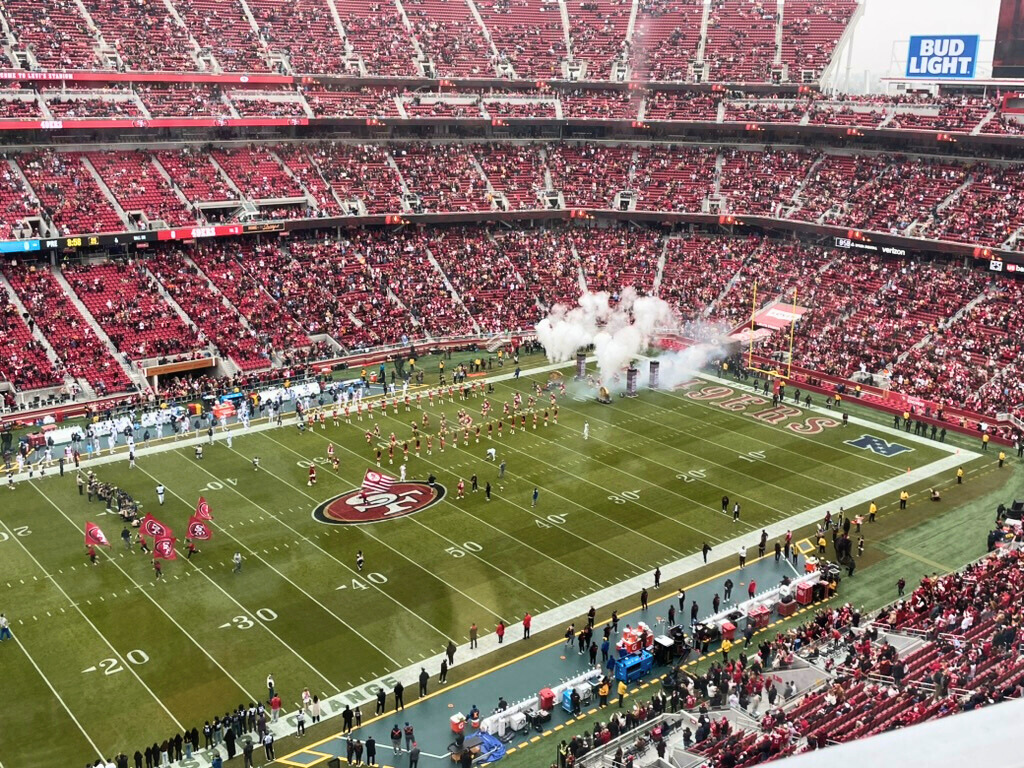
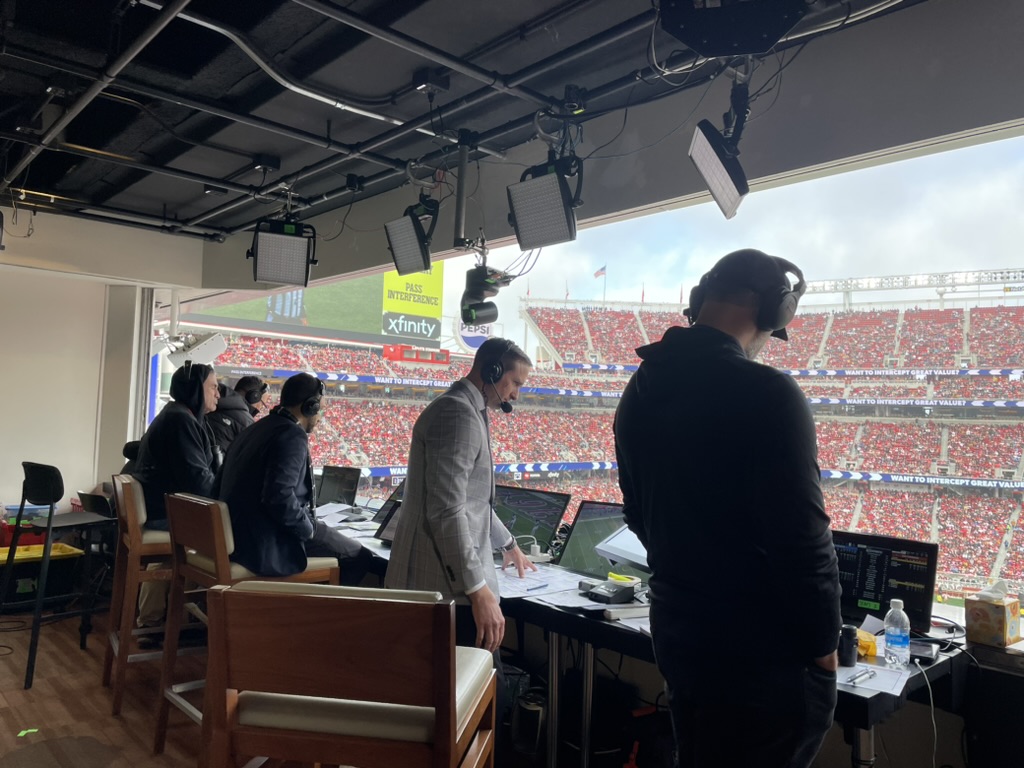
Having been with The Roar throughout my high school career, I have experienced all aspects of the writing process – creating over 30 stories and being sports editor and Co-Editor-In-Chief. Prior to NFL season concluding, I decided to research how the process of professional journalism differs from high school journalism. I was able to get in touch with Levi’s Stadium’s Senior Manager in Football Communications Kristin Wojcik and had the amazing opportunity to attend the San Francisco 49ers game against the Tennessee Titans on Dec. 14, 2025. I spent time within the press box, where I interviewed ESPN reporter Nick Wagoner, as well as experiencing a day in the life of professional sports journalism.
At SCHS’ The Roar, a typical production cycle takes around six weeks – one week each for brainstorming story ideas and creating a reporting plan, interviewing, first drafts, second drafts, final drafts and the last week for distributing the newspaper and finishing online stories. After four years in the class, I have written numerous stories and have grown comfortable with what our newspaper cycle requires.
I was introduced to ESPN reporter Nick Wagoner and had the opportunity to pick his brain about what professional sports journalism can look like. Wagoner first went into the field to be involved in sports outside of athletics and had no prior newspaper experience before attending University of Missouri. He began covering the Los Angeles Rams in 2004 then transitioned to the San Francisco 49ers in 2016.
At The Roar, a game story mainly consists of three components: a play-by-play of significant points throughout each segment of the game, the final score and quotes from interviewed players. Quotes often involve a debrief of mindset and how a successful play made the player or team feel. Wagoner, however, helped me understand how mainstream media platforms prioritize analysis rather than summaries in order to draw attention. Instead of giving a play-by-play that readers may have already watched, they inform their audience about the broader impact from events in the game.
“You can talk about a football game and so many things can happen throughout a quarter, but we live in a world now where everyone already knows what happens in a game,” Wagoner said. “What we’re doing is watching the game, taking the information that we’ve gathered throughout the week, zooming away and looking at the big picture of, ‘What does this mean? What does this mean for the team? If there’s an injury, what does the injury mean? How is it going to affect their chances of going to the playoffs?’”
Additionally, the content a reporter focuses on and the angle of the story can vary depending on the audience a specific news station caters to and the size of their platform.
“Someone who writes for the San Francisco Chronicle, for example, they’re writing for a hyperlocalized audience, whereas I’m writing for a national audience. What I need to pitch to my editors is, ‘What is something that goes beyond the scope of something that’s going to interest 49ers fans that needs to interest NFL fans?’” Wagoner said.
The Roar’s game story interviews consist of classmates and familiar faces, where follow-ups are easier to get and questions normally ask how the interviewee felt during important plays. During the press conference, I watched Wagoner ask questions to 49ers’ head coach Kyle Shanahan and players Brock Purdy, George Kittle and Christian McCaffrey in real time. I observed him ask bigger-picture questions to analyze the impact of the game events.
“I ask myself what the biggest question is coming out of the game, and I answer that question. Making something up for today, for example, it might be like, ‘What does this mean for the 49ers chances of getting far in the NFC?’” Wagoner said. “Of course, these are always big picture focuses because they want it to be related to the game but not about the game. The questions are never going to be, ‘What did you think of Brock Purdy in the third quarter?’ It’s never going to be something that is hyperfocused.”
Game stories I have written and edited have more relaxed deadlines on when they need to be published in relation to when the game was. For example, a story written on Friday has to be ready to be published on Monday. At ESPN, Wagoner explained that deadlines can be strict but reporters have experience in knowing what to write down in the moment to construct a rough draft during the game.
“Writing on a deadline, a lot of people get nervous about it, but the other beautiful thing about writing with online being an option, is that a lot of the time you can write in the moment and get what you need and then circle back to it. We call it writing through,” Wagoner said. “We’ll have times where, let’s say that the 49ers clutch a playoff spot, and my editor will say, ‘Give me 300 words at the buzzer and come back with the other 700 once you’ve worked the locker room.’”
After seeing firsthand how different the process of an article can be through a game day and understanding how journalistic focus can shift throughout newspapers, I have learned that the largest difference between high school and professional journalism is the adaptability reporters must embrace. From writing in real time to shaping a story with the right quotes for an evolving audience, the future of journalism demands flexibility and reporters eager to learn.
“For anyone who aspires to do journalism, you will probably be told, ‘Don’t go into this business because newspapers are dying,’ but I’m not going to be that guy because I want this profession to continue. It’s changing everything,” Wagoner said. “The best thing I can say is always be looking at what’s next because there’s so many different ways to do this job.”
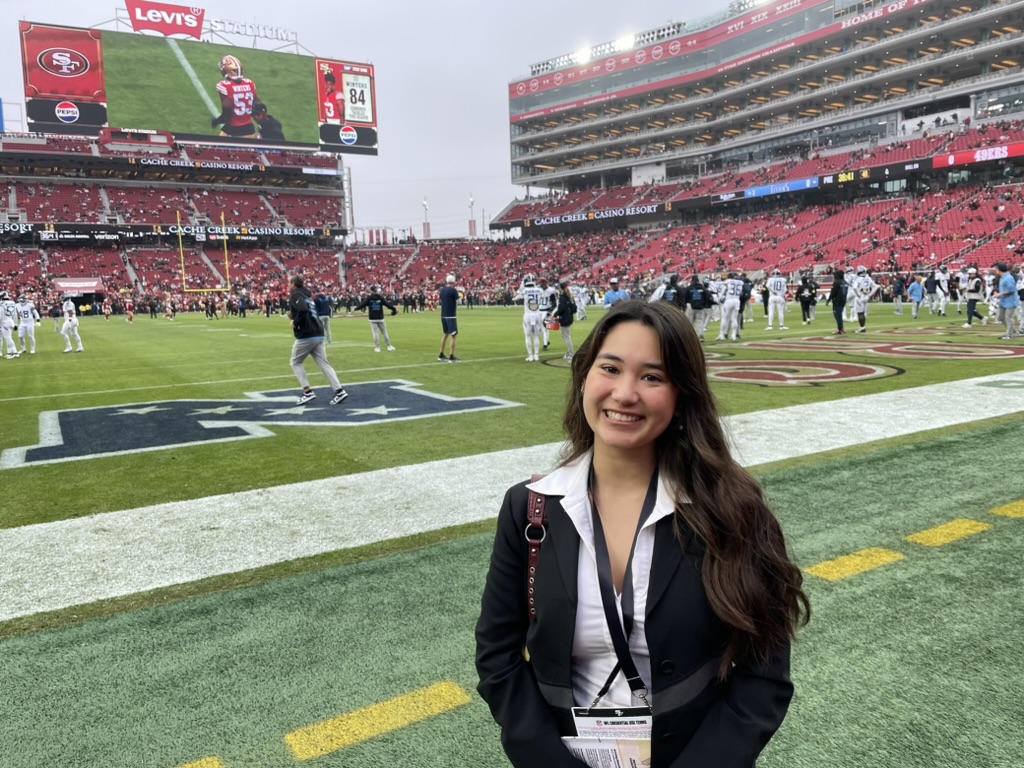
Getting through the Levi’s Stadium parking lot was an adventure, with life and fans surrounding me. I stuck out like a sore thumb in my pantsuit and boots when almost everyone else was in red and gold 49ers merchandise, but the team spirit energy all around me made me feel like I belonged.
Throughout my day, I was accompanied by Adjunct Instructor for Journalism at San Jose State University Rodney Knox who also works in Public Relations. Knox worked with the San Francisco 49ers for 20 years and has brought his college students to experience sports journalism firsthand for the past three seasons. I was also accompanied by Keyon Johnson, who works in Public Relations and is a Communications Game Day Manager. Johnson’s job centers around assisting media with game information to help their reports or articles.
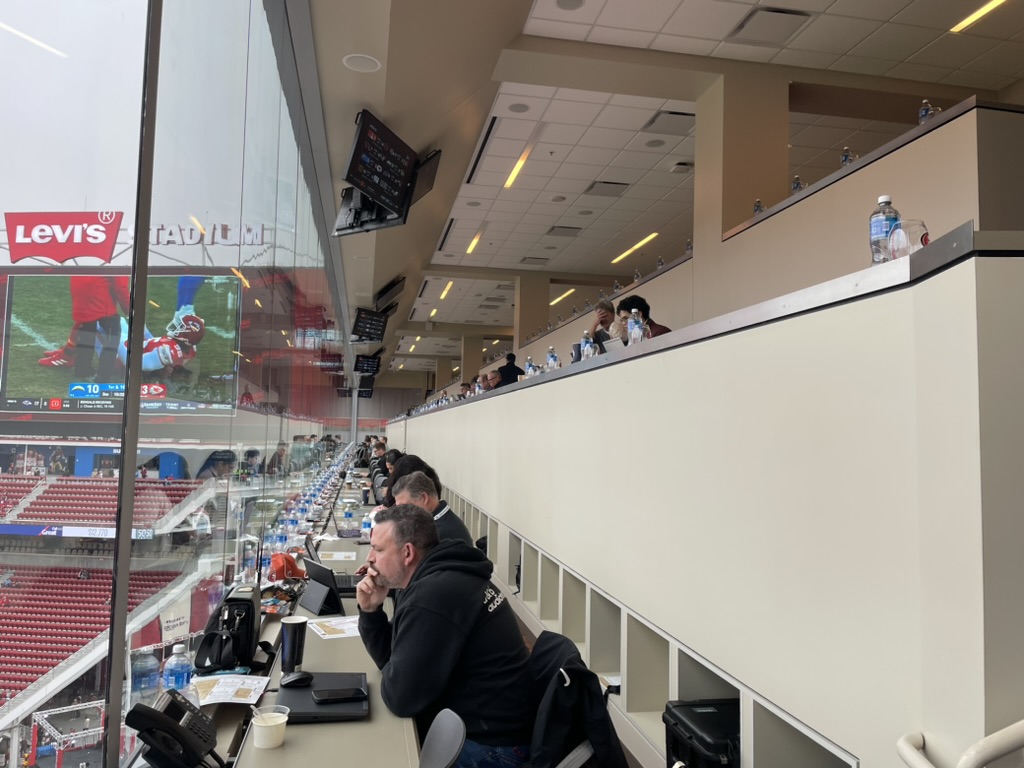
I was taken on a tour of the press box level and introduced to many reporters, including interviewing Wagoner prior to the game. A large portion of the press box was a general reporting room with rows of desks for reporters to view the game from. Another portion consisted of individual press box rooms with various uses, including local and NFL radio stations, a Spanish radio station, rooms for the statistic and analytics teams and rooms for injured players to view games with their families.
While being led around and introduced to a plethora of staff, I learned that having a journalism degree can lead one to various careers within journalism, including game statistics, radio stations and public relations.
When Knox introduced me to a Levi’s Stadium chef passing by, I discovered that working for a sports stadium can come with many perks due to how it not only houses sports games but also events like concerts. Those who work for the stadium provide services during these events, such as cooking for attendees in the suites and press rooms. While this does not necessarily apply to all those in broadcasting, I was amazed at how unique opportunities can stem from being part of the sports field outside of being an athlete.
One of my favorite parts of my journalism class is the community that is built every year as we get closer through teamwork and class time conversations. I have felt a sense of family as journalism brings together students from different grades, cliques and interests. It even introduced me to some of my closest friends. I saw reflections of this when Knox, Johnson and I walked around, and it seemed every person knew each other and greeted each other warmly with big smiles and hugs.
When writing a game story for The Roar, where the reporter sits to observe the game varies depending on the sport. During games on the field, for example, the reporter can sit in the press box at the top of the stadium stands that blocks out zero noise from the audience but gives a wide view of the field. For games held inside the main gym, a reporter will have to sit in the stands with the rest of the audience.
I spent the first quarter of the game in an individual press box with Knox and Johnson. The windows in the room could be lifted so I could better hear the audience and the announcements. When something exciting happened in favor of the 49ers, I could hear thousands of fans simultaneously screaming “Yeah” in perfect unison. I could really feel how alive all the fans were, feel the energy of the stadium, especially when the jumbotron focused on George Kittle and he interacted with the crowd by hoisting his arms into the air, encouraging them to make noise.
Toward the end of each quarter, I accompanied Johnson to the print room, where the statistics team would send quarter game summaries and statistics to be printed. These papers were then run to different broadcasting stations, including commentators, cameramen and radio stations.
For the second and third quarter, I sat in the main press box without Knox and Johnson to get a feel of what a real reporting space was. The area was a suit and tie work environment rather than a collection of football fans, feeling more like an office due to everyone’s professionalism and neutrality.
The space contrasted my journalism classroom drastically through the intensity of focus surrounding me and the antisocial nature of the reporters prioritizing gathering their facts about the game. I felt removed from the fan side of football and fully immersed in the working side of it.
Each seat was provided with a roster of each team’s players for the day to make identifying important players on the field easier. Many reporters around me had binoculars to gain better visibility due to us being so high up and away from the players. There was live audio in the room giving a verbal play-by-play of the game, and there were no open windows, so the sounds of the audience would not distract reporters.
Being on the other half of the press level and sitting in the third level of desks, I could no longer see the jumbotron, meaning I no longer saw a large chunk of the game spirit from the camera panning to the stands or the ‘Get Loud’ animations.
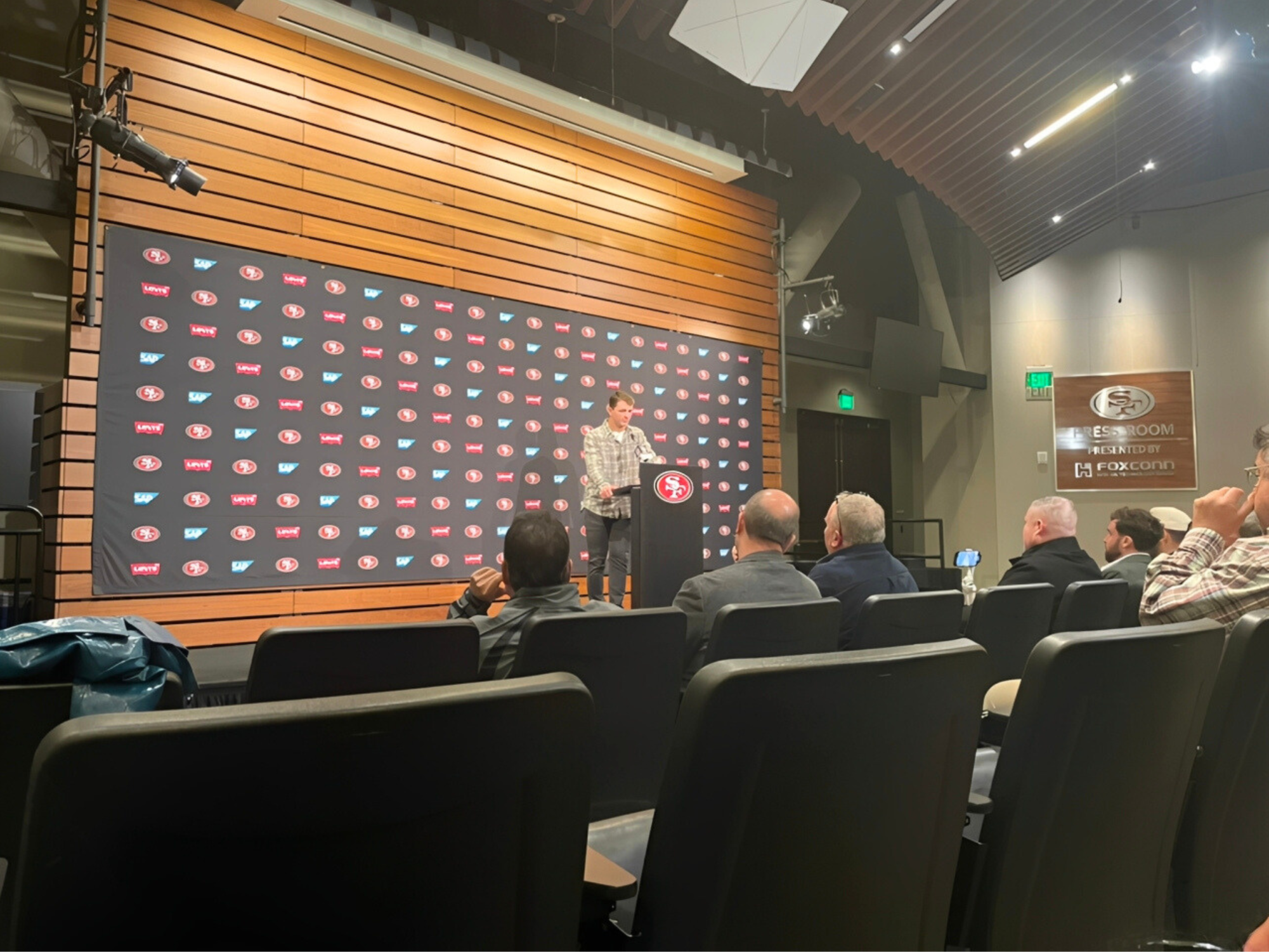
At the end of the fourth quarter, Knox and I ventured down to the field level for the 49ers press conference. We watched 49ers head coach Kyle Shanahan and players Brock Purdy, George Kittle and Christian McCaffrey answer questions from reporters, including Wagoner. I have never seen a sports press conference outside of “Ted Lasso,” so the rapid fire of questions being asked surprised me as reporters talked over each other to be the first to ask a question. I was amazed at how casual the environment seemed because all the reporters have already interviewed these players multiple times before, though I do not doubt that some of them were excited to see the players as well.
Although I am not the biggest football fan, I could not help but be a little star struck at the sight of these famous football players. When Kittle first entered the room, he reminded me of Kid Rock, and I wondered if he was a full-of-himself player who knows he’s vital to the team.
He wore two backpacks, one a Louis Vuitton, the other pink and orange polka dots. When he began answering questions, however, I enjoyed his responses the most as he was well spoken and they were answers I as a reporter would want to receive. He interacted with the reporters and cracked a few lighthearted jokes.
After the press conference, I was introduced to Executive Vice President of Communications Corry Rush, who explained that reporters are discouraged from asking questions to players outside of press conferences in order to keep opportunities for unique quotes equal between reporters. We passed Purdy, now dressed in his regular clothing – jeans and a flannel – which was strange to be reminded that the faces I see on TV are average Joes as well and live normal lives just like me.
Knox and Johnson gave me a great experience and taught me so much. Everyone I encountered welcomed me warmly and encouraged me throughout my reporting. By the end of the day, I could confidently say that the 49ers were my favorite team and the people working within had my utmost respect. The sports world does not just consist of famous faces on TV scoring impossible goals or the coaches who instruct them, but also those who work behind the scenes to create the news empire that comes from the NFL.